
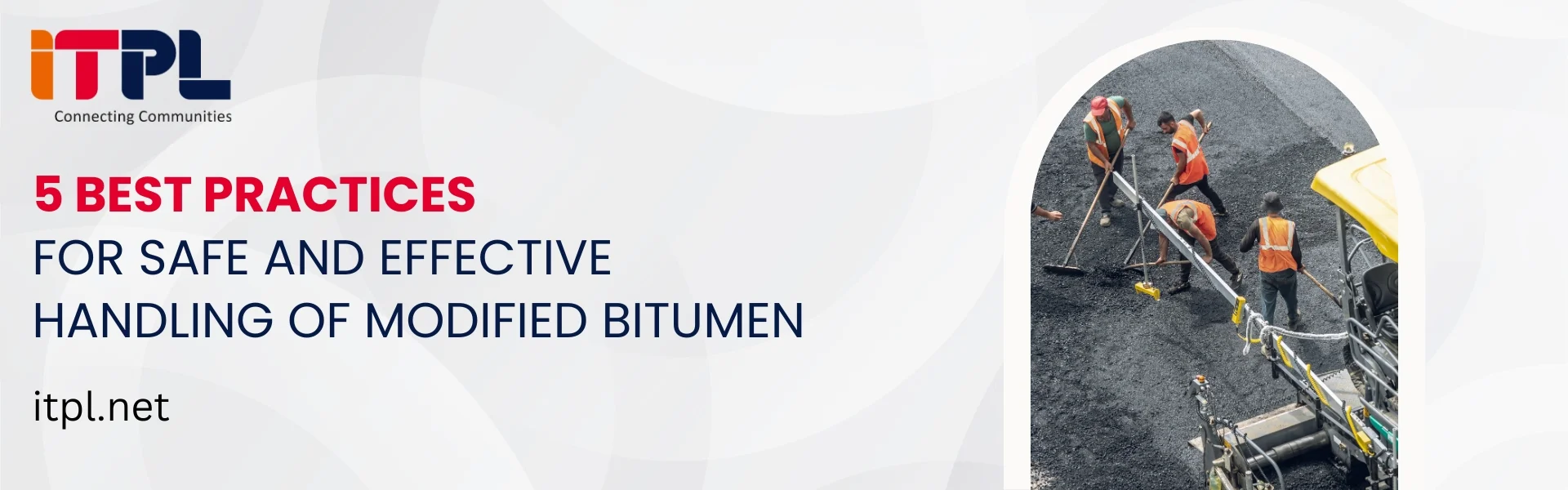
5 Best Practices for Safe and Effective Handling of Modified Bitumen
Modern road infrastructure demands durable and flexible binders capable of withstanding heavy traffic and fluctuating climates. Traditional binders often have limited elasticity and resistance to deformation, resulting in early pavement failures. Modified binders, such as polymer- and rubber-modified bitumen, address these challenges by improving flexibility, adhesion, and long-term performance. When considering the pavement’s overall lifecycle cost, modified bitumen can be economical.
Due to these properties, modified bitumen has become a preferred choice for road infrastructure projects across the country. However, making optimum use of these binders consistently depends not only on the material selection but also on how they are handled, stored, and applied on site. If good handling practices are observed, modified bitumen presents a low order of potential hazard. Hence, adequate safety precautions must be taken while handling modified bitumen.
Some of the best practices in handling modified bitumen include:
1. Storage and Transportation
The first step in the effective handling of modified bitumen begins with storage and transportation. Compared to conventional grades, modified binders are more sensitive to prolonged heating. Storage tanks should be painted with reflective colours or shaded to reduce heat absorption.
They should be well-insulated to keep bitumen at the proper working temperature. This becomes crucial, especially when working with modified bitumen because continuous overheating can compromise the product’s performance. Real-time temperature monitoring can help preserve binder quality from plant to site.
Moreover, the modified bitumen tanks should be stored in dry areas and sealed tightly to prevent contamination and air exposure. They should be labelled with relevant safety information, including material content, handling instructions, and maximum temperature.
2. Temperature Control During Handling and Processing
Temperature management is critical during the handling and processing of modified bitumen. Modified bitumen must be heated to the optimal range with accurate temperature gauges before use. Underheating can affect the quality of the final product, and overheating can cause the binder to break down and release toxic fumes. Keep track of the temperature during mixing and application to prevent inconsistent mixing.
Contractors should align plant temperatures, transport durations, and laying schedules to ensure the binder reaches the site in optimal condition.
3. Surface Preparation and Application Techniques
Proper surface preparation and uniform application help ensure strong interlayer bonding and reduce the risk of premature failures. Before applying bitumen, the surface should be clean and free from moisture or dirt. This ensures optimal adhesion and reduces slippage.
Equipment like tankers or sprayers should be designed to operate efficiently in varied temperatures. Rapid setting bitumen emulsion is often used where fast overlay placement is required, particularly in high-traffic urban corridors. When projects require deeper penetration into granular layers, slow setting bitumen emulsion provides better control and consistency.
4. Safety Protocol while Handling Modified Bitumen
During the mixing of bitumen with aggregate, fumes are emitted. Additionally, hot bitumen and high ambient temperatures can be a hazardous combination. Workers should wear personal protective equipment (PPE), including eye protection, face shields, respirators, safety boots with non-slip soles, heat-resistant clothing and gloves, to prevent skin exposure to hot materials.
5. Safety Training for Workers
Contractors should conduct regular training sessions to familiarize workers with the safety risks associated with bitumen and the correct ways of handling it. Workers should be trained in:
- Safe methods for heating and transporting modified bitumen
- Ventilation and fume control
- Emergency steps in case of burns or spills
- Using the safety equipment efficiently
- Disposing of bitumen waste according to local environmental processes
Conclusion
In the long term, these safe handling practices lead to measurable benefits. From temperature control to application, each step influences final road quality. At ITPL, we offer advanced modified bitumen solutions, including crumb rubber modified bitumen (CRMB) and natural rubber modified bitumen (NRMB), designed to perform reliably under Indian site conditions.
Explore our range of modified bitumen to ensure durable and high-performance roads.